
Work with Your Hands
In a culture dominated by screens, our bodies are underused and our minds are overworked. The CDC reports that nearly 1 in 5 U.S. adults (20%) experience anxiety symptoms, while sedentary behavior continues to rise. Research published in the British Journal of Occupational Therapy found that 81% of knitters with depression reported feeling happier after knitting, and frequent knitting was linked to significantly lower anxiety levels. Studies on gardening also show measurable reductions in cortisol, the body’s primary stress hormone. The takeaway? God designed embodied faith. When we work with our hands, we don’t just make something—we heal something. An active body quiets an anxious mind.
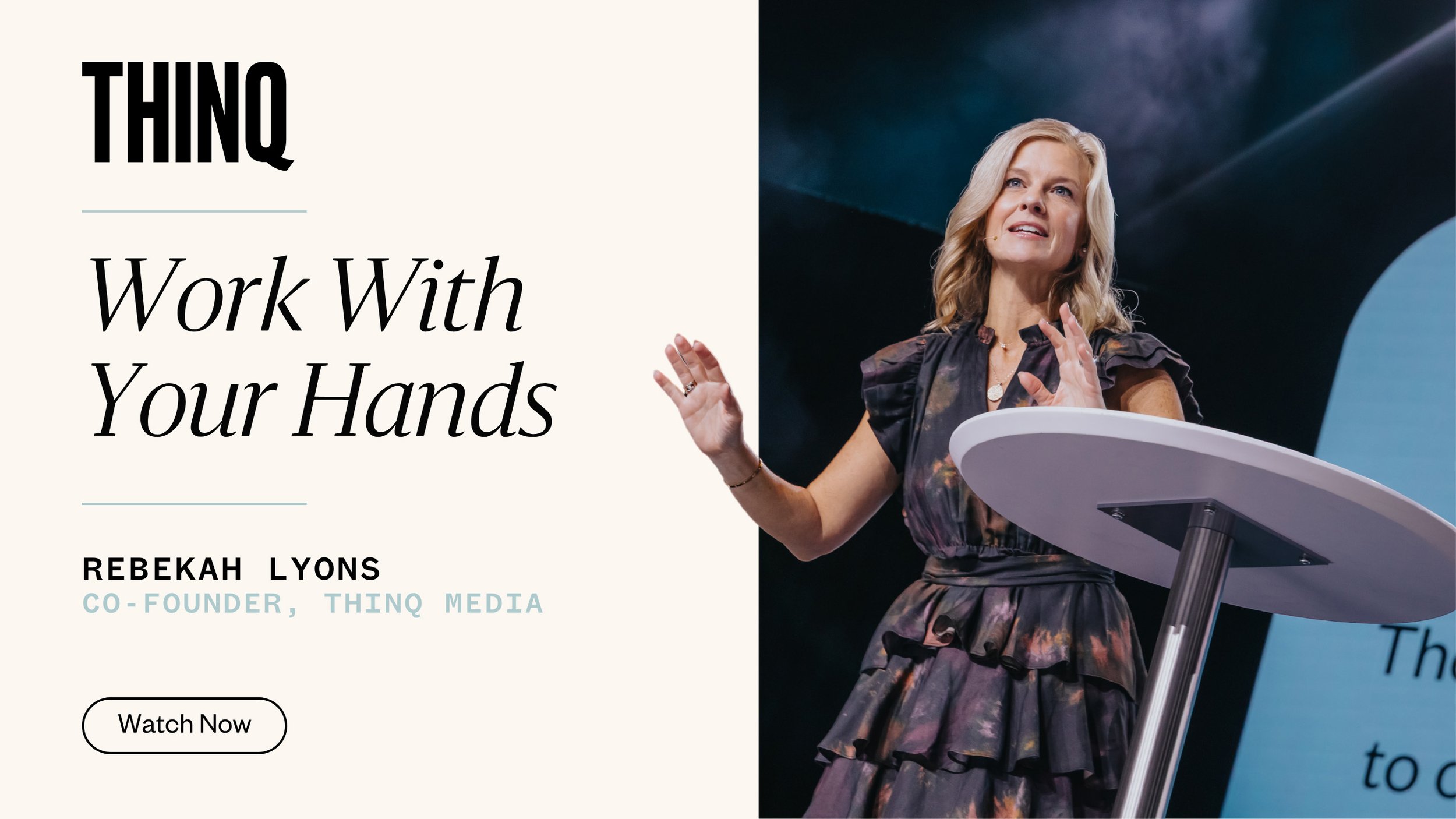
Growing up with scarcity, Rebekah learned early that creativity wasn’t a luxury—it was survival. Yet what began as necessity became a pathway to connection, healing, and worship.
In her THINQ Summit talk, Rebekah reminds us that creativity is not just about making something beautiful—it’s about becoming who we were created to be. Science now confirms what Scripture has long taught: when we engage our hands and imaginations, we quiet anxiety, renew our minds, and draw closer to God.
Through the THINQ lens, Rebekah invites us to think theologically about our gifts, reflect historically on how the Church once led culture through beauty, and lean in with curiosity and nuance to what creativity can teach us about healing and hope.
What might happen if you reclaimed the sacred rhythm of making—writing, planting, painting, cooking—as an act of worship? What if beauty became your response to brokenness?
This week, let Rebekah’s story inspire you to go make something (1 Thessalonians 4:11–12)—not for achievement, but as a way to honor the Creator who made you to create.